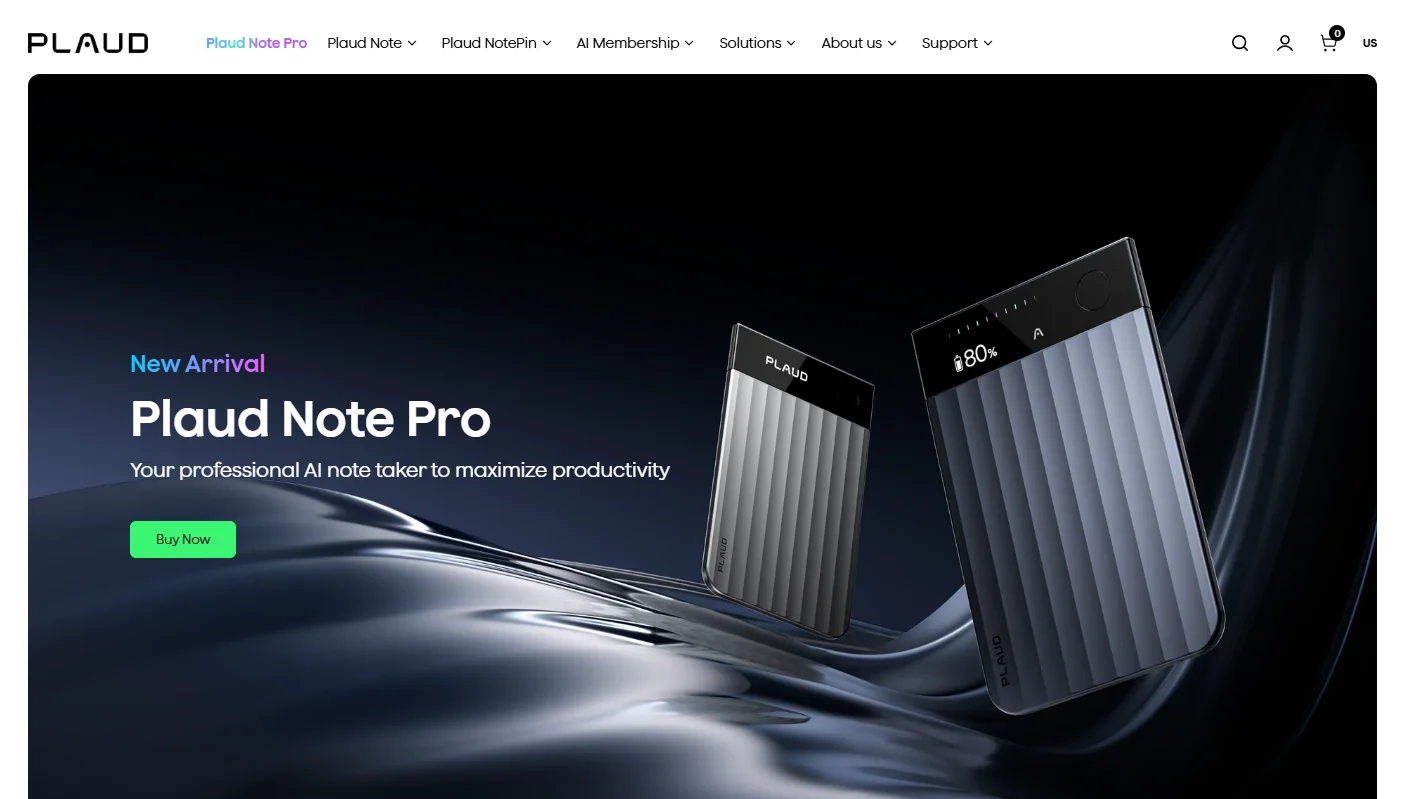
Ahead of this year's Consumer Electronics Show (CES) in Las Vegas, hardware maker Plaud unveiled the Plaud NotePin S, a new AI-powered recording pin, alongside a desktop application designed to help users take notes during digital meetings.
The company first introduced its pin-style recorder in 2024, which received high praise from my former colleague Brian Heater. The latest model features a physical button that allows users to start and stop recordings with ease. During recording, pressing the button also lets you mark specific moments—a feature similar to what’s available on the newer Plaud Note Pro.
Priced at $179, the Plaud NotePin S comes with several accessories right in the box, including a clip, lanyard, magnetic pin, and wristband. This gives users multiple wearing options based on personal preference. The device also now supports Apple Find My, making it easier to locate if misplaced.
Core specifications remain unchanged from the previous generation. It includes 64GB of built-in storage and a battery life rated for up to 20 hours of continuous recording. Equipped with dual MEMS (micro-electromechanical systems) microphones, it can capture clear audio within a range of up to 9.8 feet. Users receive 300 minutes of free transcription per month.
While the recording range and battery life are shorter compared to the Note Pro, the NotePin S is more compact and highly portable, especially when used with any of the included attachments. According to the company, this makes it ideal for professionals who are frequently on the move.
This marks Plaud’s fourth device release, with over 1.5 million units sold to date. Historically focused on in-person meetings, Plaud is now expanding into virtual collaboration by launching a new desktop client aimed at competing with tools like Granola, Fathom, and Fireflies. The app detects when a meeting is active and prompts users to begin capturing transcribed content.
The Mac version records meeting audio through system-level input and uses AI to transform the transcription into structured notes. Last year, the company added multimodal input support to its mobile app, allowing users to include images and typed notes alongside audio transcripts. This same functionality has now been brought to the desktop application.